
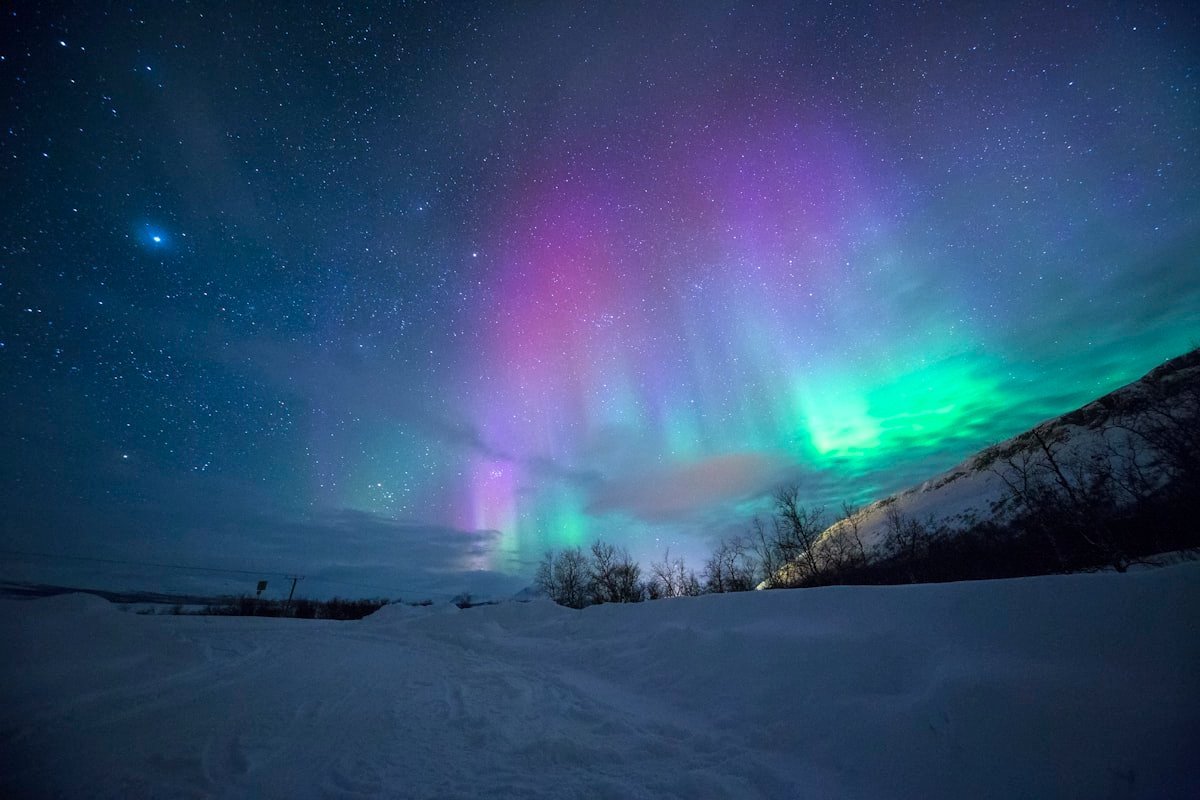
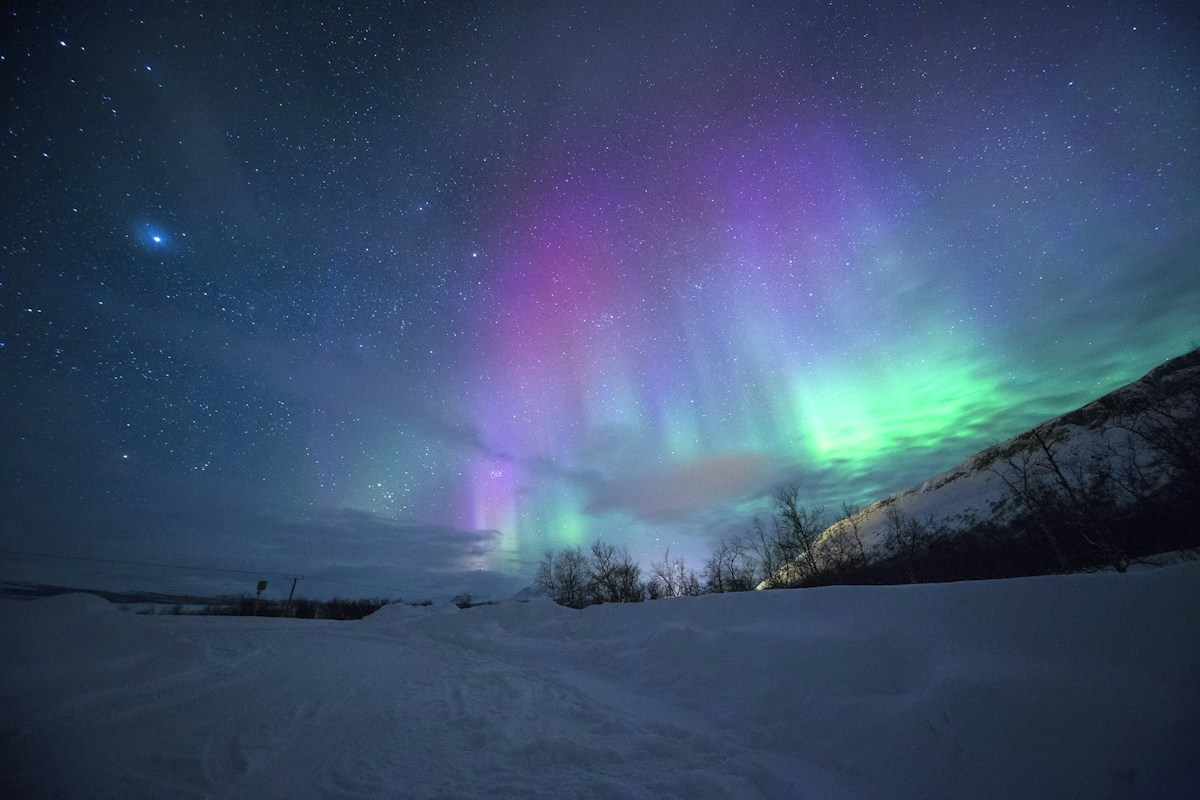
Sweden is the third-largest country in the European Union and most of its area is forests, lakes, and the subarctic landscapes of Lapland. The country has a right of public access — allemansrätten — that allows anyone to walk, cycle, and camp on any land that is not under active cultivation or immediately around a private dwelling. This means that the forests and lakes are genuinely accessible in a way that few countries match. The west coast has a coastline of granite skerries unlike anything in the Baltic. Swedish Lapland has the most accessible northern lights viewing in Europe.
1. Swedish Lapland in Winter
”
Abisko National Park in Swedish Lapland is one of the best places in the world to see the northern lights — the Abisko sky station sits above the cloud layer that forms in the valley below, giving clear skies at high altitude when the rest of Lapland is overcast. The Aurora Sky Station chairlift runs nightly from December through March. The ICEHOTEL in Jukkasjärvi — 200 kilometres east of Abisko — is rebuilt entirely from ice and snow each winter and has been doing so since 1990. Reindeer sledding, dog sledding, and snowmobile safaris are all available from Kiruna, the nearest large town.
2. Gothenburg
”
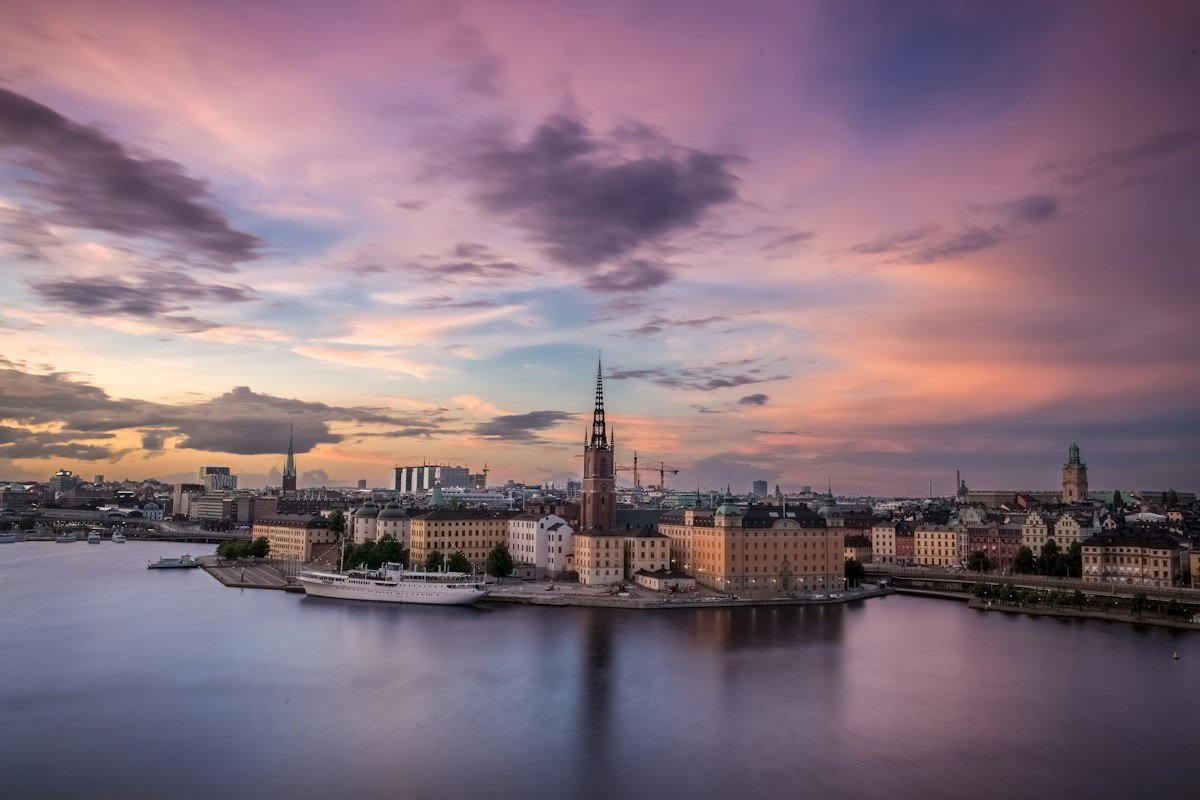
Gothenburg is Sweden’s second city and has a personality distinct from Stockholm — more working class in its roots, more genuinely maritime, and with a food scene that has quietly become one of the best in Scandinavia. The Haga neighbourhood has the best fika (Swedish coffee and cake culture) in the country, in cafés that have been there since the 19th century. Liseberg is the best amusement park in Scandinavia. The Gothenburg archipelago — islands accessible by ferry from the city harbour — is less famous than Stockholm’s and less crowded for it.
3. The Göta Canal
”
The Göta Canal connects Gothenburg to Stockholm via 190 kilometres of canals, lakes, and rivers, crossing the country from west to east. The traditional way to do it is a three-day boat trip on one of the historic passenger vessels that have been running the route since the 19th century. It passes through farmland, forests, and small towns, through 58 locks that were all hand-dug in the early 19th century by soldiers serving their required military service. One of the most distinctly Swedish travel experiences available.
4. Visby, Gotland
”
Visby on the island of Gotland is the best-preserved medieval Hanseatic town in Scandinavia — the 3.5-kilometre ring wall from the 13th century is almost completely intact. The town inside the wall has medieval church ruins, cobblestone streets, and rose gardens that bloom against the limestone walls in summer. The ferry from Oskarshamn or Nynäshamn takes three hours. Medieval Week in August turns the town into a living history event that is simultaneously tourist attraction and genuine local festival. The island’s beaches, particularly Tofta and Gnisvärd, are the warmest and sandiest in Sweden.
5. The High Coast
”
The High Coast (Höga Kusten) in northern Sweden is a UNESCO World Heritage landscape — the coastline is rising at 8mm per year as the land rebounds from the weight of the ice sheet that covered it 10,000 years ago. The result is a fjord-like landscape of rocky headlands, islands, and inlets unlike anywhere else in Sweden. The Skuleskogen National Park has trails through ancient spruce forest to viewpoints over the archipelago. The highest coastal cliff in Sweden — Skuleberget, 295 metres — is climbable by cable car or on foot.
Practical Information
”
Sweden’s SJ rail network connects Stockholm to Gothenburg (3 hours), Malmö (4.5 hours), and the larger northern cities. The overnight train to Abisko and Kiruna departs Stockholm daily and takes 17-20 hours — book sleeper compartments well in advance for winter travel. Domestic flights serve Gothenburg, Malmö, and several northern destinations from Stockholm Arlanda. Driving is the best option for the Göta Canal, the High Coast, and Gotland ferry connections. Sweden is expensive — budget Scandinavian prices throughout. The right-of-public-access law means camping in national parks is free and legal.
Related Travel Guides
Keep planning with these guides: Best Places in Ireland Beyond Dublin, Best Places in the Netherlands Beyond Amsterdam, Best Places in Austria Beyond Vienna.
Official sources
Check current conditions with Visit Sweden before you travel.